








Permanent pacemaker insertion
Cardiac pacing is indicated when the heart is too slow.
There are many reasons why the natural and regular rhythm of the heart is disturbed (e.g. myocardial heart attack, inflammation, etc.), or age-induced changes.
If the heart rhythm is too slow, and the body is also exposed to stress or strain, there are these symptoms:
- Vertigo,
- nausea,
- weakness,
- or short-term consciousness disturbance.
It is a sign that the heart is unable to perform its basic function – to supply enough blood to all the organs of the body – especially the brain.
The pacemaker function
The pacemaker delivers small, precisely timed electrical impulses to the heart muscle, causing the heart to contract regularly, just like a healthy heart. Today's modern pacemakers only work when the heart's natural rhythm is absent (i.e. they only work when needed). Therefore, the device must also be able to detect the heart's own rhythm, and if no spontaneous contraction occurs, the pacemaker will give a small electrical impulse to artificially induce this contraction by stimulating the heart muscle.
Pacemaker parts
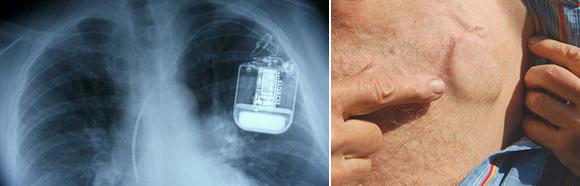
The pacemaker consists of a battery and tiny electrical circuits, and its electrical impulses are transmitted through an electrode (which is a thin, full-length insulated wire) to the heart.

Pacemaker insertion
The procedure usually takes around half an hour. It is performed under local anaesthesia in the area below the collarbone. The position of the electrodes is checked on the X-ray screen. Once the electrodes have been tested, the pacemaker is attached, everything is checked again and the device is placed in a pre-formed pocket in the subcutaneous tissue and the pocket is sewn up with a few stitches. The procedure is painless.
Preparation before the procedure
Pacemaker insertion is performed while the patient is hospitalized in the cardiology department. The patient arrives the day before the hospitalisation, so the immediate preparation is done during the hospitalisation. It includes:
- Antibiotic prophylaxis (prevention of infection),
- shaving of the chest and underarms,
- insertion of an intravenous cannula,
- the patient is hungry from midnight (no food, drink, smoking),
- morning medication is administered, the patient drinks a small sip of water (tea).
Immediate post-operative care
- Stay hungry for two hours after the procedure.
- Stay in bed until morning. A drain is brought out of the wound, which the nurses check and record the amount of fluid in it.
- During the first few days after implantation, do not put up your hand on the side where the pacemaker is implanted, above the shoulder level and do not make any sudden movements with your arm or shoulder.
- After about a week, you'll come in to have the stitches removed.
The doctor must be informed in case of: (even after the hospitalization is over!!)
- Local symptoms – the wound area is still sore, abnormally red, warm, swollen or oozing fluid.
- General symptoms – fever, chest pain or twitching, prolonged fatigue, shortness of breath or worsening of existing shortness of breath.
Prior to discharge from the hospital, the patient will be scheduled for an initial outpatient check-up. No surgery will be its part – the check-up is painless. The function of the pacemaker, battery status and basic parameters of the device will be checked. Each patient is given a pacemaker patient card to carry at all times. It is also necessary to attend regular check-ups of the pacemaker.
Life with a pacemaker
You can safely engage in everyday activities (cleaning, showering, swimming, driving a car, after consulting a doctor you can resume physical activity (sports, hiking, gardening), hobbies, sexual activity. If you are not sure that your activity will affect the function of your pacemaker, always consult a medical professional.
Pacemaker and electrical devices
Common electrical appliances should not affect the function of the pacemaker. However, if you experience any unpleasant sensations (dizziness, fast or slow heartbeat) when using an electrical device, turn it off immediately or leave the area where it is located.
Feel free to use these devices
Radio, HI-FI, video, el. hair dryers, dryers, dishwashers, vacuum cleaners, microwave ovens, kitchen appliances, office appliances - fax machines, computers, telephones. It is better to put the mobile phone on the opposite side to the pacemaker and not to carry it in the breast pocket.
Be sure to consult your doctor in case of:
- Working with heavy vibrating equipment e.g. jackhammer.
- Using firearms.
- Working or staying near equipment with strong electromagnetic fields or high voltage.
- Using an electric welder.
Travelling
If you are travelling by plane, please inform security about the pacemaker or present your pacemaker patient card. The service will ensure that the check-in is safe for you. Driving a motor vehicle is safe. Always wear your seatbelt - it does not harm the pacemaker.
Medical check-ups and interventions
Before any check-up or intervention, alert the doctor to the implanted pacemaker. This applies to dentists, massage therapists and rehabilitation workers. Ultrasound, echocardiography and dental drilling are perfectly safe. In the case of special examinations - e.g. lithotripsy, radiotherapy, nuclear magnetic resonance (NMR) or electrocautery - your cardiologist should be consulted.
Leave a Reply
You must be logged in to post a comment.