








What is Angiography?
Angiography is an examination that is performed using X-rays and a contrast agent that is injected into a blood vessel. The examination is mainly used to view the arteries. The classic requirement is to examine the arterial system of the lower limbs when ischemic disease of the lower limbs is suspected. In addition, narrowing of the renal arteries or narrowing of the carotid arteries (neck arteries) can be detected. This method of examining the vascular supply is slowly being superseded by CT angiography and MR angiography in which it is not possible to perform a therapeutic intervention at the same time - angioplasty (stretching the vessel with a balloon) or the insertion of a reinforcement in the form of a metal tube (stent).
The process of examination
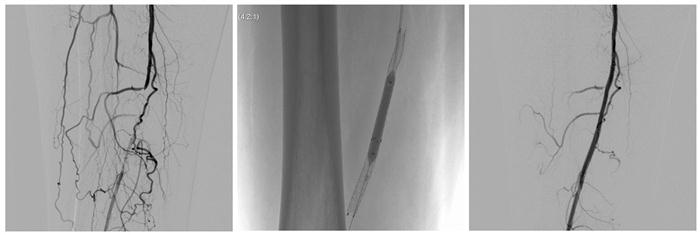
The examination is performed lying down under local anaesthesia. The patient lies on the examination table in the angiography room. The doctor numbs the puncture site, e.g. groin (possibly another entry site) and punctures the femoral artery (or another artery depending on the entry site). A thin plastic tube is inserted into the artery using a guide wire and a contrast medium is then passed through it. An X-ray machine is available at the examination table, on the screen of which the doctor can see in real time the flow of the contrast medium through the arteries and thus find pathologically affected areas on the vessels. The examination takes about one hour on average, including any therapeutic procedure. The X-ray images are stored in a computer and the doctor can also look at them at any later time.
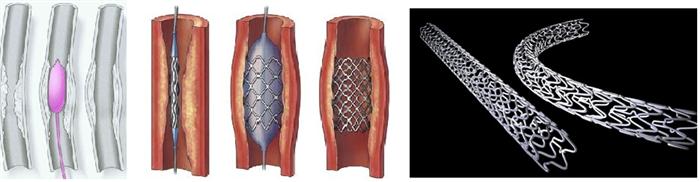
If a narrowed area is found, the doctor can dilate it with a tiny balloon that is inserted into the designated area through a thin wire (lead) in the blood vessel. In addition, a reinforcement in the form of a metal tube (stent) can be inserted to reinforce the narrowed area.
After the examination is completed, the puncture site is covered with a firm bandage (bandage) and a pressure bandage or the puncture site is closed with a special vascular patch, which is later absorbed by itself. The patient must lie still for 8 hours after the procedure and not get out of bed. The pressure dressing is usually removed after 8-12 hours.
Contraindications to the examination
As with other examinations where the patient is given a contrast agent, an allergic reaction may occur. The contrast agent also places a burden on the kidneys and can damage them. For this reason, a drinking regimen should be followed after angiography or intravenous infusions can be used.
Thyrotoxicosis - increased thyroid function
Benefits of the examination (procedure)
- A high-quality view of virtually all blood vessels in the human body.
- The possibility of direct therapeutic intervention for some arteries or veins in the human body with a simple puncture (minimally invasive procedure) without the need for surgery.
Disadvantages and possible complications of the examination (procedure)
The device used for the angiographic examination works with X-ray ionizing radiation, which results in a radiation burden on the patient; therefore, it is necessary to indicate this examination with regard to the magnitude of this burden and the diagnostic and therapeutic yield.
A hematoma (bruise) may form at the puncture site, therefore it is necessary to observe bed rest for 6 to 24 hours, bleeding may also occur in the vicinity of the puncture, possibly even thrombosis of the vessel. These complications are managed conservatively or surgically depending on their extent and nature.
Potential complications:
- Disruption and release of the atherosclerotic plaque with subsequent injection into the vasculature.
- Rupture of aneurysm during surgery with bleeding.
Extravascular procedures
The extravascular interventional procedures performed in our department include mainly puncture and drainage of pathological fluid inflammatory collections in the abdominal cavity, thoracic cavity, retroperitoneum or pelvis. Diagnostic biopsies of pathological deposits in various organs.
In addition, our workplace performs vertebroplasty and cyphoplasty.
You can make an appointment / inquire about an examination by calling 567 157 645
Instrumentation:
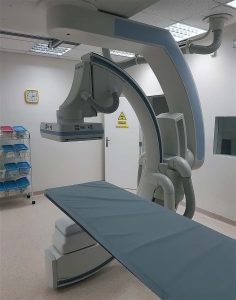
- Siemens Artis Zee Ceiling
Leave a Reply
You must be logged in to post a comment.