







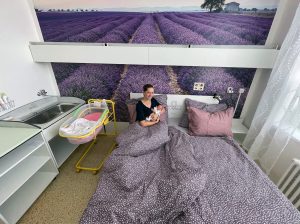
Novorozenecké oddělení Nemocnice Jihlava poskytuje komplexní péči o zdravé novorozence narozené v jihlavské porodnici. Naším cílem je podpora kojení a co největší počet plně kojených dětí při propuštění. Je zde zaveden systém rooming-in na všech pokojích. Maminky jsou v nepřetržitém kontaktu se svými dětmi od porodu až do propuštění, a to i v případě, že jsou po císařském řezu.
In case of a physiological delivery, your baby will be immediately placed on your abdomen, marked with a bracelet and the umbilical cord will be cut. Depending on the baby's condition and mutual agreement, the baby will be taken care of on the changing table in mother's presence. The umbilical stump is treated, the baby is weighed, length, body temperature is taken and the head and chest circumferences are measured. Bonding on the mother's body and attachment to the breast is performed then. During bonding, we monitor all vital signs of a baby using a saturation probe attached to the baby's leg. Within 24 hours after the delivery, the baby will be examined by a pediatrician.
The postnatal bathing takes place at the same time as the bathing demonstration in 6 - 24 hours directly in the room of the six-week ward. Only in indicated cases, the 1st bath takes place in the delivery room.
Most of the nurses in the neonatal unit also work as lactation consultants who can help and advise you on breastfeeding and baby care. The ward has a Lactation Clinic which is also available to mothers after their discharge from the hospital.
During your baby's stay in the neonatal unit, we carry out screening examinations to perform the early detection of serious diseases in babies.
This screening is regulated by the Czech legislation and are covered by the general health insurance.
Newborn laboratory screening for congenital and hereditary diseases
The newbon's blood drop is taken within 48 to 72 hours after the delivery.
Objective: the early detection of serious diseases that cannot be detected any other way. Early detection allows treatment to be initiated immediately and so it prevents a child's permanent disability.
The best-known monitored diseases include congenital hypothyroidism (reduced thyroid function), phenylketonuria (a serious metabolic defect that threatens the neurodevelopment), congenital adrenal hyperplasia (congenital lack of adrenal function) and cystic fibrosis, SMA and SCID.
For more information see: www.novorozeneckyscreening.cz
Ultrasound of the kidneys
Objective: to determine whether the kidneys of the baby are properly formed - their length, shape, location, cupping system are checked and also if their emptying is normal.
It is performed by a paediatrician in the room in the mother's presence on the 2nd day after the delivery.
Orthopaedic hip check-up
Objective: early detection of a hip development disorder, which can occur in 3-5% of the population. Early treatment and monitoring can prevent severe hip damage with permanent consequences.
The check-up is carried out by an orthopaedist in the room in the presence of the mother and includes a clinical check-up of the hip joints and a preventive examination of the hip joints by ultrasound. The check-up includes a comprehensive clinical examination of the large-joint mobility.
Screening for congenital lens cataract
Objective: early detection of cataracts leads to early treatment.
It is performed by the pediatrician in the room in the presence of the mother during the morning rounds, the ophthalmoscope is used to make the red reflex in both eyes.
Screening of hearing
Objective: early detection of congenital hearing loss in children and provision of the preventive follow-up care, mainly the delayed development of the communication skills in children can be prevented.
A basic hearing test can be performed on the 2nd day after the delivery. It is a simple, painless examination. The baby receives a soft measuring probe in the ear canal, the machine sends a weak sound stimulus and records the responses of the auditory system. The child is asleep or awake during the examination.
The discharge of the baby to the home care is planned after all medical, legal and social conditions are met, i.e. all screening tests are performed, the baby is healthy without jaundice, the mother is managing the care and nutrition of the baby and the baby is thriving. According to the recommendations of the Czech Society of Neonatology, the discharge is possible after 72 hours. It is important to arrange in time for a district paediatrician to take over the care of the child.
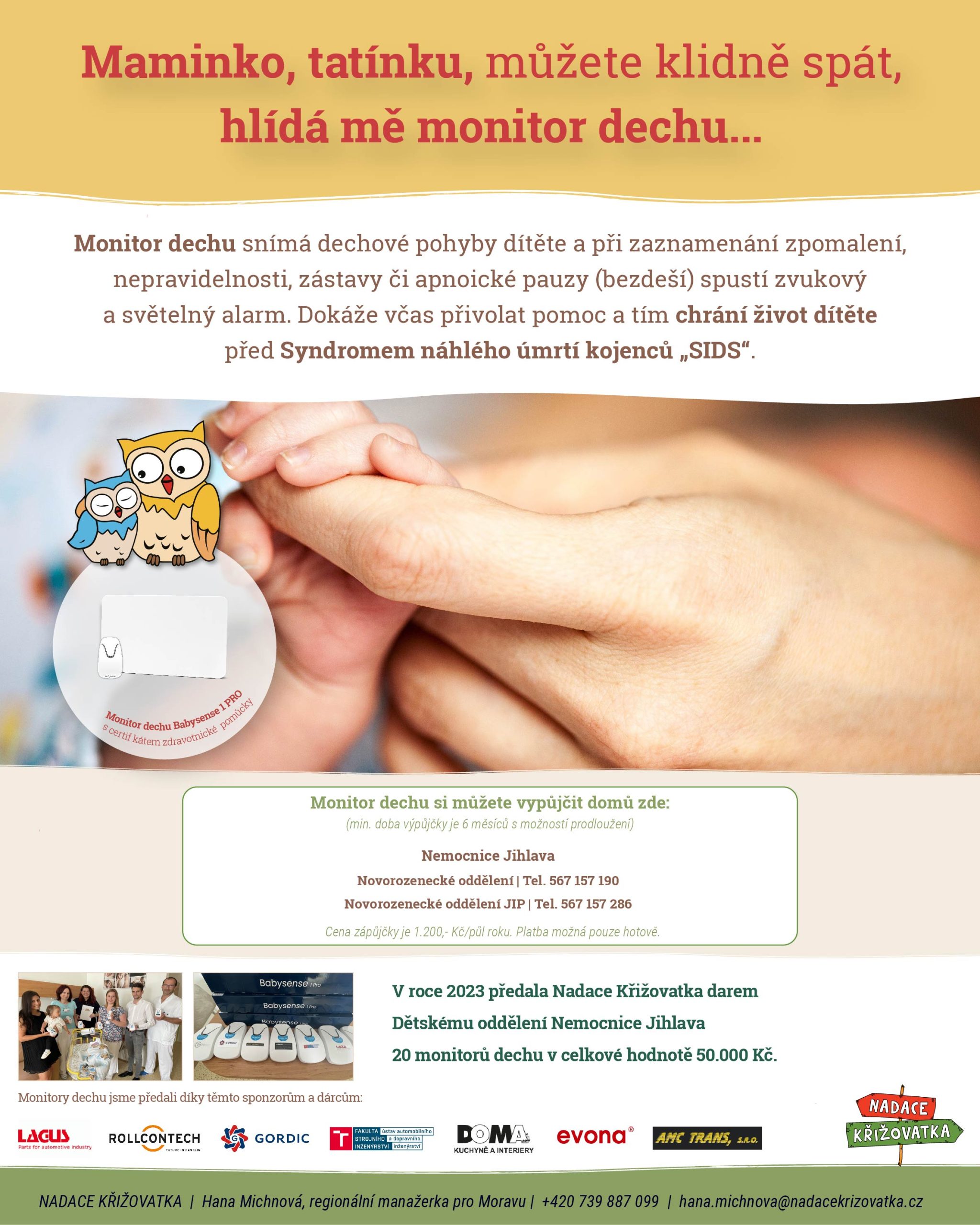
It is possible to rent a monitor of baby's breating (Baby Sense). In cooperation with the Křižovatka Foundation the fee is 1200 CZK for 6 months.
Our goal is a happy mother and a happy baby.

Leave a Reply
You must be logged in to post a comment.