








Electrophysiological examination (performed by KC Vysočina)
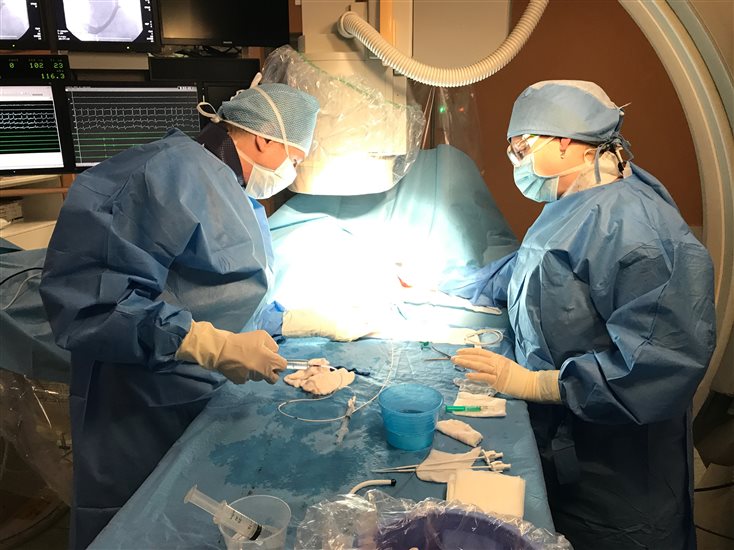
Electrophysiological testing is performed to diagnose a heart rhythm disorder (arrhythmia). This examination involves inserting catheters (special tubes) into the heart with the help of an X-ray machine. The catheters are typically inserted from the right groin. Common indications for this examination are palpitations (chest palpitations), syncope (sudden disturbances of consciousness) and some selected patients with heart failure to assess the need for an implantable device (ICD). Nowadays, in most cases, the diagnostic electrophysiological examination is followed in one session by the therapeutic part, i.e. catheter ablation, together with relieving the patient of his/her disorder.
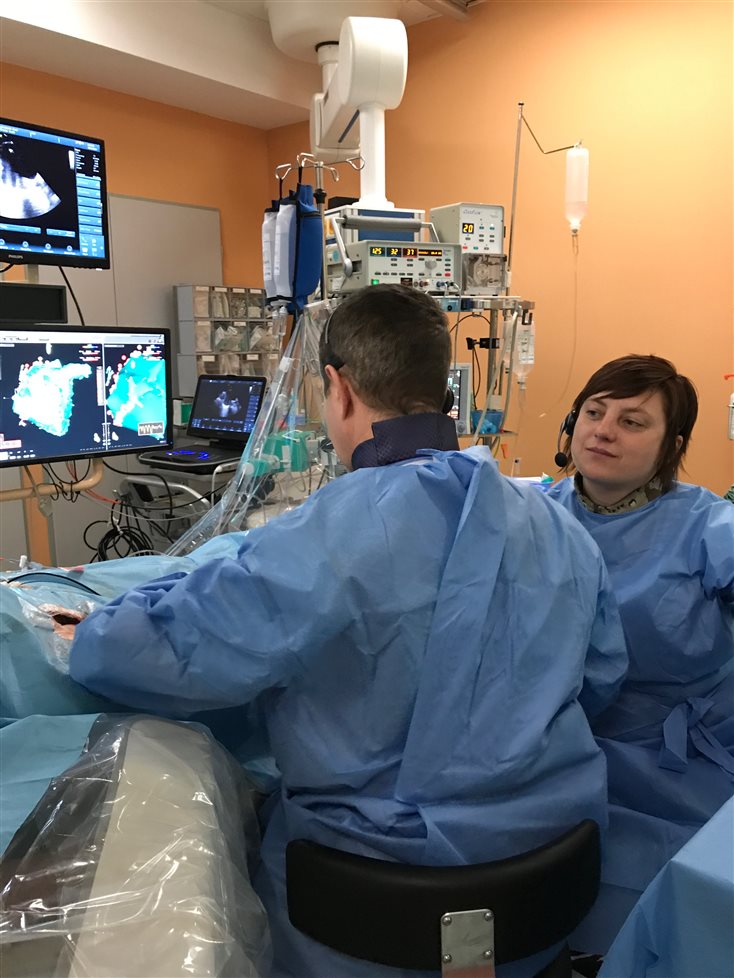
Catheter ablation is a method of treating some rhythm disorders. Ablation involves "burning" the area responsible for the arrhythmia by using catheters (tubes) to make heat at the location in the heart. Typically, catheters are inserted from the right groin or sometimes from both groins. In some cases, it is necessary to induce the arrhythmia so that the examining physician is able to determine where the arrhythmia is coming from. The success rate of catheter ablation is close to 100 % for some arrhythmias (e.g. ablation of flutter or regular supraventricular tachycardia), while for others it is lower and may be between 70 and 80 % (e.g. paroxysmal atrial fibrillation) or even below 50 % (e.g. persistent atrial fibrillation).
Examination and treatment with the catheter ablation requires the patient's cooperation, i.e. the ability to lie flat on the back for 1-3 hours in the operating room and then 8-12 hours in the inpatient ward. Catheter ablation is performed under analgosedation, i.e. after administration of strong analgesics, and can be uncomfortable at certain parts of the procedure. In our highly experienced department, catheter ablation is considered a safe treatment and is preferred to pharmacological treatment (drugs) in many indications.
The most common arrhythmia for which catheter ablation is currently performed is atrial fibrillation (irregular beats originating from the atria). This rhythm disorder, if untreated, carries an increased risk of hospital admissions, stroke and heart failure. The principle of atrial fibrillation ablation is to insert a catheter through the groin into the left atrium of the heart, where a series of "burns" are used to create circular lesions around the pulmonary veins that drain into the left atrium. Atrial fibrillation ablation is a technologically demanding procedure that uses modern navigation and computer systems. Typically, patients undergo a CT scan of the heart (computed tomography scan) a week before the ablation, and some patients undergo a complementary oesophageal ultrasound before the procedure. After ablation, patients are then left on or newly set up on anticoagulation therapy (e.g. Warfarin, Pradaxa, Eliquis, etc.) for a minimum of 3 months.

Implantation of an ICD (implantable cardioverter defibrillator) involves inserting an electrode (lead) from the left (rarely right) subclavian area into the heart and connecting it to a generator (power source) that is "sewn" into the subcutaneous tissue. An ICD is indicated for patients who are at risk of severe life-threatening arrhythmias, typically patients with heart failure. The defibrillator is able to detect these arrhythmias and treat them with either a series of rapid pulses or a strong electrical discharge. In about a third of patients, a special electrode is then indicated to be inserted into the vein surrounding the left ventricle to help them with the symptoms of heart failure (i.e. to improve breathlessness and reduce swelling of the limbs). The implantation of an ICD is similar in principle to the insertion of a permanent pacemaker, but in the case of an ICD it is slightly more robust and has a slightly shorter lifetime.

How to make an appointment?
Tel: 567 157 245
Leave a Reply
You must be logged in to post a comment.